
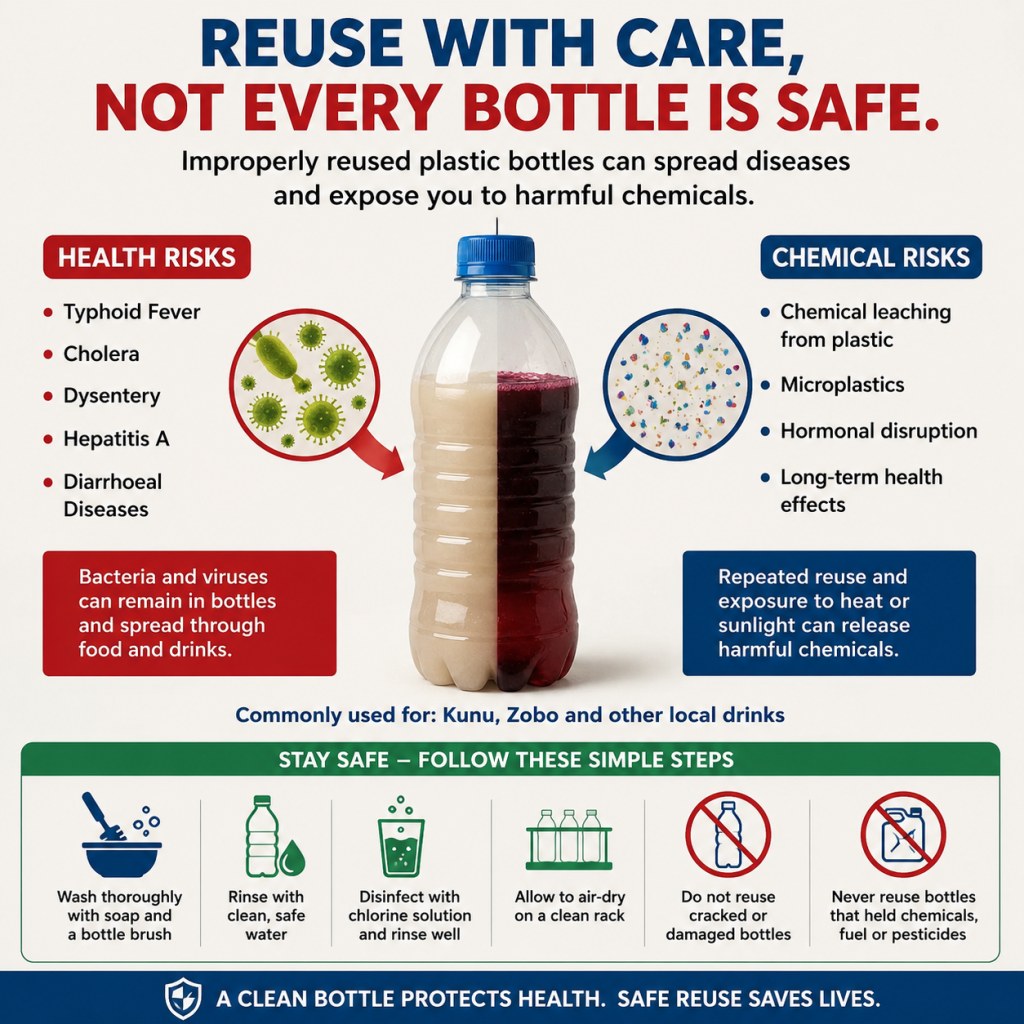
HOW UNSAFE REUSE CAN SPREAD DISEASE AND EXPOSE YOU TO HARMFUL CHEMICALS.
Plastic bottles have become an essential part of everyday life in Nigeria. They are widely collected and reused for packaging locally made beverages such as kunu, zobo, fruit juice, and drinking water. While reusing plastic bottles helps reduce environmental pollution and lowers production costs, unsafe reuse without proper cleaning and disinfection can become a serious public health hazard.
The Biological Danger: Invisible Germs That Can Make You Sick
Every day, thousands of used plastic bottles are discarded after people drink from them. Many of these bottles are recovered by waste collectors and resold to beverage producers. Unfortunately, some are only rinsed with water before being refilled.
Although a bottle may appear clean, it can still contain harmful microorganisms. Saliva left on the mouth of the bottle, contaminated hands during handling, dirty washing water, and poor sanitation can introduce disease-causing organisms into the bottle.
When beverages such as kunu or zobo are packaged in contaminated bottles, consumers may unknowingly ingest these microorganisms.
Diseases that can spread through contaminated food and drinks include:
– Typhoid fever (Salmonella Typhi).
– Cholera (Vibrio cholerae).
– Dysentery (Shigella species).
– Diarrhoeal diseases caused by pathogenic Escherichia coli (E. coli).
– Hepatitis A, a viral infection transmitted through food or water contaminated with infected fecal matter.
– Norovirus, a common cause of vomiting and diarrhea.
The Chemical Danger: When Plastic Itself Becomes a Risk
The danger is not limited to germs. Many plastic bottles sold with bottled water or soft drinks are designed for single use. When these bottles are reused repeatedly, especially under harsh conditions, the plastic begins to degrade.
Exposure to sunlight, high temperatures, repeated washing, and physical mishandle causes the plastic to develop microscopic (tiny unseen) cracks and slowly break down. During this process, very small amounts of chemicals from the plastic can migrate into the beverages (drinks) stored inside.
Some chemicals of concern include:
- Antimony; which may leach from certain PET plastic bottles, particularly when exposed to prolonged heat.
- Microplastics; tiny plastic particles that may be released as bottles age and become scratched or worn.
- Chemicals from damaged plastic or contaminated recycled bottles, especially if bottles were previously used for non-food substances.
Although the amount of these chemicals may be low, repeated exposure over many years has raised concerns among researchers about possible effects on human health. Some studies suggest potential links with hormone disruption, reduced fertility, developmental problems, and an increased risk of certain chronic diseases. Research in this area is ongoing, but reducing unnecessary exposure is a sensible public health precaution.
Simple Rinsing Is Not Enough.
Many people believe that rinsing a bottle with water makes it safe for reuse. Unfortunately, this practice removes only visible dirt and does not reliably eliminate bacteria, viruses, or other microorganisms. A bottle may look clean while still carrying disease-causing organisms capable of contaminating food or drinks.
Recommended Local Disinfection Practices:
To protect consumers, every reused bottle should undergo proper cleaning and disinfection before use.
Recommended practices include:
- Wash bottles thoroughly using clean water, detergent, and a bottle brush.
- Rinse with clean (potable) water.
- Disinfect using a correctly prepared food-safe chlorine (bleach) solution at the recommended concentration and contact time, followed by rinsing with safe water if required.
- Allow bottles to air-dry on clean racks instead of wiping them with reused cloths or towels.
- Use only treated water when preparing beverages.
- Boil water, allow it to cool under hygienic environment, use it to rinse bottles and to dilute kunu or zobo.
- Never reuse bottles that previously contained pesticides, fuel, engine oil, chemicals, or medicines.
- Discard bottles that are cracked, heavily scratched, cloudy, or discolored.
Protecting Health While Protecting the Environment.
Reusing plastic bottles can support environmental sustainability, but unsafe reuse defeats that purpose by creating new health risks. Every producer of kunu, zobo, or other locally prepared drinks has a responsibility to ensure that bottles are properly cleaned, disinfected, and suitable for food use.
As consumers, we should also be vigilant about the drinks we buy and encourage food vendors to maintain high standards of hygiene.
A bottle should quench thirst, not become a source of disease or long-term chemical exposure. Safe reuse saves the environment; unsafe reuse can cost lives.
Written By:
Bootyin Alice Peter
Public health professional and Environment Health Advocate.