
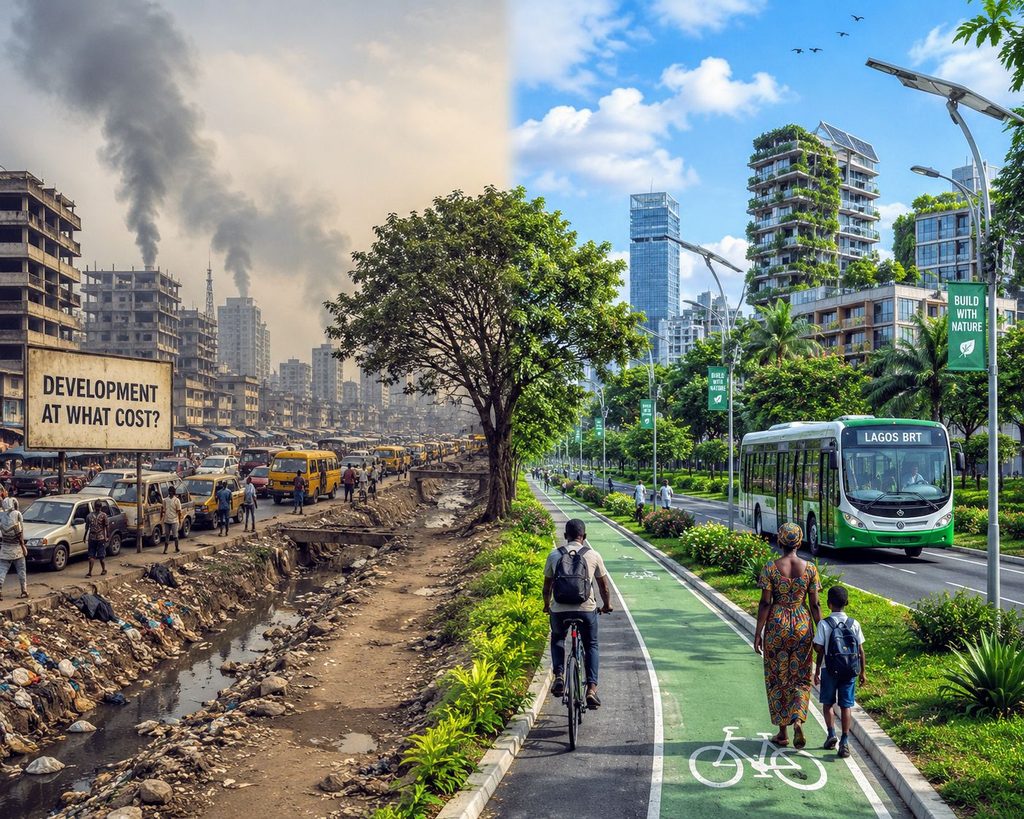
Building Cities without Losing Nature
Urbanization is an important part of development. As populations grow, cities must expand, infrastructure must improve, and communities need access to better housing, transportation, healthcare and economic opportunities.
But development also comes with a responsibility.
We build tall buildings and call it progress. We transform natural landscapes and call it urbanization. We replace trees and green spaces with concrete, roads and structures.
The question is not whether cities should develop. They should.
The question is: How do we develop without compromising the natural environment that supports human health and wellbeing?
Trees and green spaces do more than beautify our communities. They contribute to cleaner air, shade, temperature regulation, biodiversity and healthier living environments. When these natural systems are lost, communities can face increasing challenges related to air pollution, heat, environmental degradation and respiratory health.
Interestingly, we are now investing in artificial systems to recreate some of the benefits that nature once provided naturally.
This should encourage us to rethink what we mean by development.
Sustainable development should not require us to choose between modern cities and healthy environments. Instead, our cities should be designed to accommodate both.
We can build upward while preserving green spaces. We can expand infrastructure while protecting trees and natural ecosystems. We can embrace technology while recognizing that technology cannot always replace the services provided by nature.
The cities of the future should not only be bigger, taller and more technologically advanced. They should also be healthier, greener and more livable.
Because ultimately, development should not simply change where we live.
It should improve how we live.
Bootyin Alice Peter